Frozen Evaporator Coil: Causes, Signs, and What to Do
You look at your indoor AC unit and see something that should not be there — a layer of frost or solid ice coating the copper lines or the unit itself. In a place like Wilmington, NC, where summer temperatures regularly hit the 90s, finding ice on your air conditioner feels deeply wrong. And it is. A frozen evaporator coil is a clear sign that something is malfunctioning, and continuing to run the system can cause serious, expensive damage.
Here is everything you need to know about why coils freeze, what makes Wilmington's climate a contributing factor, and how to handle it.
How the Evaporator Coil Works
Your air conditioner does not actually create cold air — it removes heat from your indoor air. The evaporator coil, located inside your air handler or furnace, contains cold refrigerant that absorbs heat as your blower fan pushes warm indoor air across the coil. The refrigerant evaporates, carrying the heat outside to the condenser, where it is released.
This process also removes humidity. As warm, moist air passes over the cold coil, water vapor condenses on the coil surface and drips into a drain pan — which is why your AC produces water as a byproduct.
The system is designed to operate within a specific temperature and airflow range. When something disrupts that balance, the coil temperature drops below 32 degrees Fahrenheit and moisture on the coil surface freezes instead of dripping away. Once ice starts forming, it insulates the coil, reducing heat absorption further, which causes more freezing — a vicious cycle that can encase the entire coil in a block of ice within hours.
The Top Causes of a Frozen Evaporator Coil
1. Dirty Air Filter
This is the most common cause and the easiest to prevent. A clogged filter restricts airflow across the evaporator coil. Without adequate warm air flowing over it, the coil gets too cold and freezes.
In Wilmington, our heavy pollen seasons (spring and fall) and coastal dust mean filters clog faster than in many other regions. During peak pollen season, a standard 1-inch filter can become significantly restricted in as little as two to three weeks.
The fix: Check your filter monthly. Replace it at minimum every 60 to 90 days — more often during high-pollen periods or if you have pets. This single habit prevents a large percentage of frozen coil incidents.
2. Low Refrigerant (Leak)
Refrigerant is the lifeblood of your AC system. When the charge is low — almost always due to a leak — the remaining refrigerant expands more than it should inside the evaporator coil, dropping the coil temperature below freezing.
Signs of low refrigerant alongside a frozen coil:
- Hissing or bubbling sound near the indoor unit
- The system runs constantly but the house never reaches the set temperature
- Higher-than-normal electric bills
- Warm air coming from supply vents even though the system is running
Low refrigerant requires professional diagnosis and repair. Simply adding refrigerant without fixing the leak is like putting air in a tire with a nail in it — it buys time but solves nothing. See our detailed guide on refrigerant leak repair for more information.
3. Blocked or Closed Supply Vents
Every supply vent in your home is part of the airflow system. When too many vents are closed — often by homeowners trying to "save energy" by closing vents in unused rooms — the reduced airflow across the evaporator coil can cause freezing.
Common misconception: Closing vents in unused rooms does not save energy. It actually increases static pressure in the duct system, forces the blower to work harder, and can contribute to coil freezing, duct leaks, and premature blower motor failure.
4. Dirty Evaporator Coil
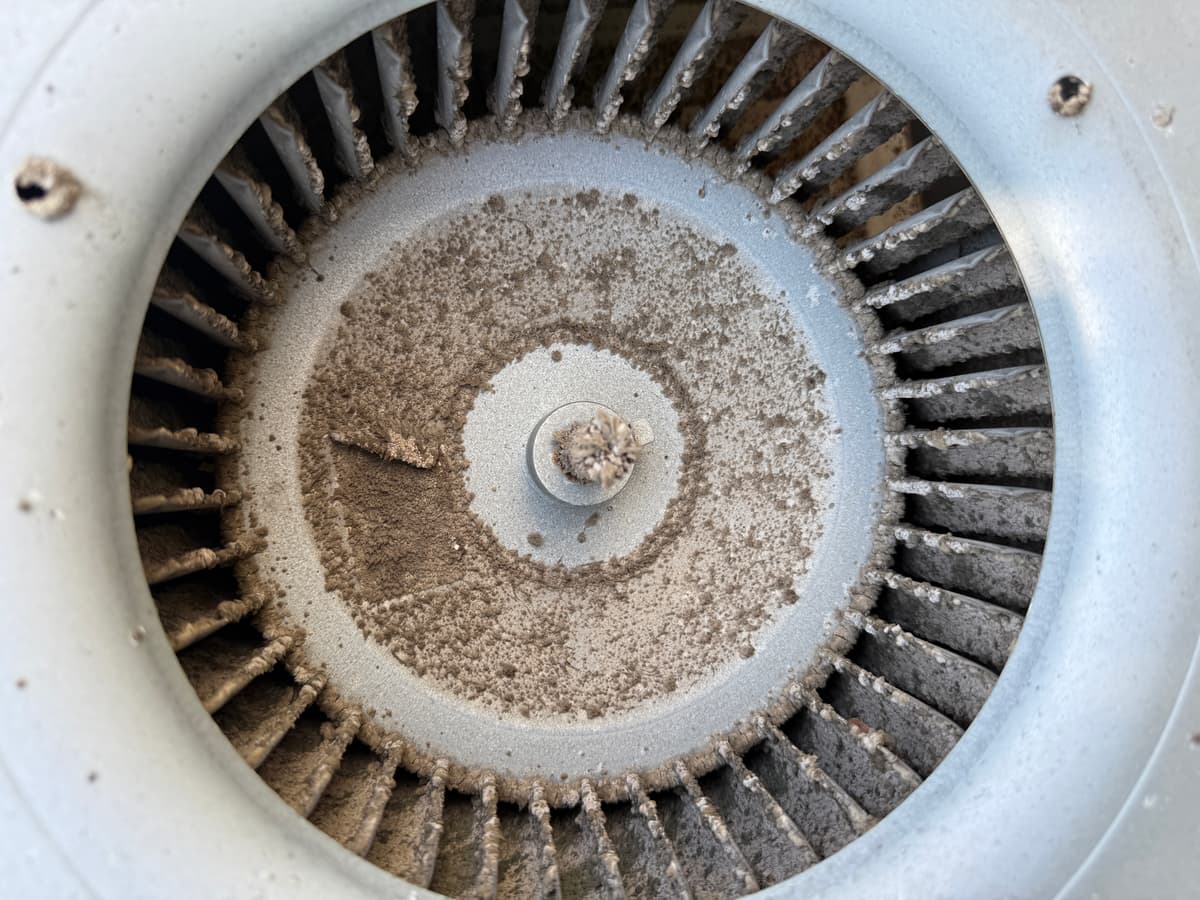
Over time, dust, pet dander, and other particles bypass the filter and accumulate on the evaporator coil itself. This layer of grime acts as insulation, preventing the warm air from properly transferring heat to the refrigerant. The coil gets too cold and freezes.
A dirty evaporator coil requires professional cleaning. This is part of a thorough HVAC maintenance tune-up and should be done annually.
5. Blower Fan Problems
If the blower fan is running at reduced speed — due to a failing motor, a dirty blower wheel, or a faulty capacitor — airflow across the coil drops even with a clean filter. Reduced airflow means reduced heat transfer, which means a colder coil.
Signs of blower fan issues:
- Weak airflow from vents throughout the house
- Unusual humming or squealing from the air handler
- The fan runs intermittently when it should run continuously during a cooling cycle
6. Running the AC When It Is Too Cold Outside
Air conditioners are designed to operate when outdoor temperatures are above approximately 60 degrees Fahrenheit. Running your AC on a cool Wilmington evening in early spring or late fall — when temperatures dip into the 50s — can cause the evaporator coil to freeze because there is not enough heat load in the house to keep the coil above freezing.
Why Wilmington's Humidity Makes It Worse
Wilmington's average summer humidity of 78 to 82 percent means there is significantly more moisture in the air passing over your evaporator coil compared to drier climates. More moisture means more water condensing on the coil, and when the coil is borderline cold, that extra moisture freezes faster and builds ice more aggressively.
In drier climates, a slightly restricted filter might not cause freezing. In Wilmington, the same restriction level can trigger a full freeze-up because of the additional moisture load. This is why we emphasize more frequent filter changes and annual maintenance for our coastal customers.
Signs Your Evaporator Coil Is Frozen
You may not be able to see the evaporator coil itself — it is enclosed inside the air handler. But these signs indicate a freeze-up:
- Warm air from supply vents even though the system is running
- Visible ice on the refrigerant lines (the copper or insulated pipes running from your indoor unit to the outdoor unit)
- Water around the indoor unit from ice melting and overflowing the drain pan
- The system runs continuously without reaching the set temperature
- Hissing or unusual sounds from the indoor unit
- Higher than normal electric bills from the system running overtime
What to Do If Your Coil Is Frozen
Step 1: Turn off the AC. Switch the thermostat to OFF or switch the mode to FAN ONLY. Continuing to run the compressor with a frozen coil can damage the compressor — and compressor replacement is one of the most expensive HVAC repairs, often costing $1,500 to $3,000+.
Step 2: Let the ice melt. This can take anywhere from 1 to 24 hours depending on how badly the coil is frozen. Running the fan (FAN ONLY mode) speeds up the thawing process.
Step 3: Place towels around the unit. As the ice melts, it will produce a significant amount of water. Protect your flooring and watch for drain pan overflow.
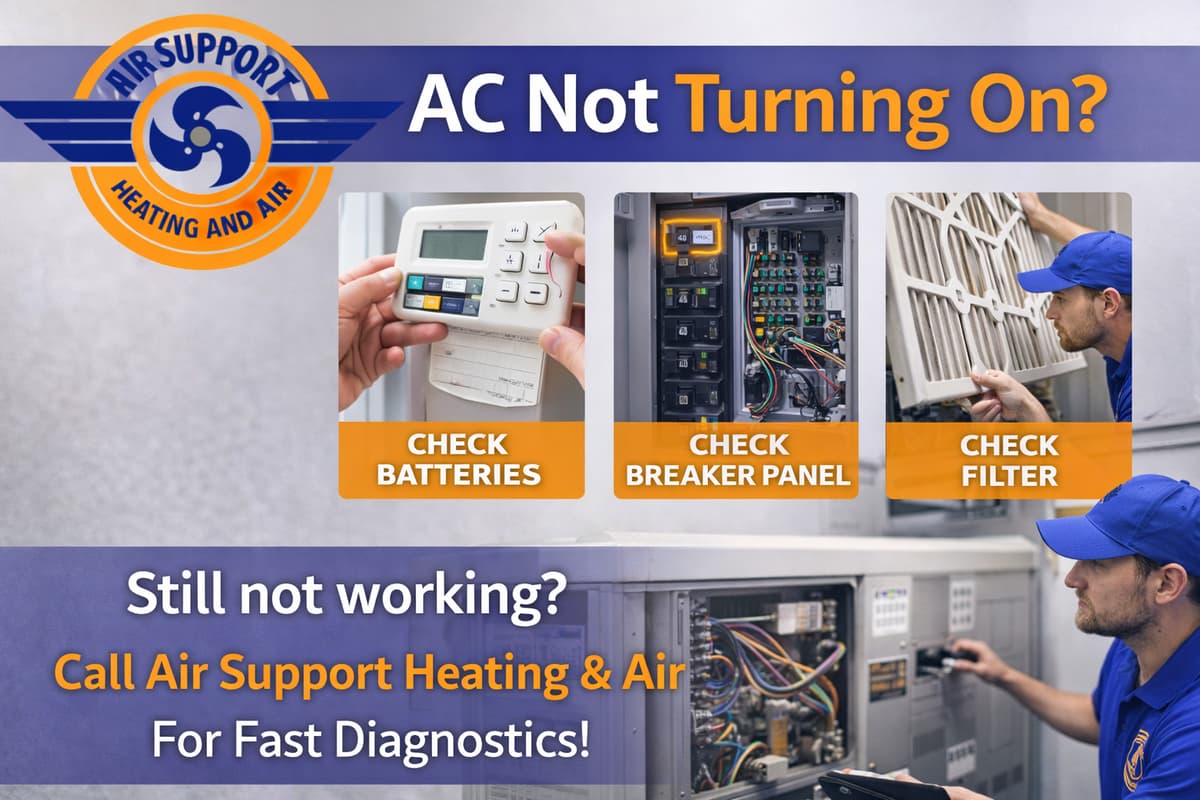
Step 4: Check and replace the air filter. If the filter is dirty, replace it before restarting the system.
Step 5: Open all supply vents. Make sure every vent in the house is open and unobstructed.
Step 6: Restart and monitor. Once the ice has fully melted, turn the system back to COOL. If it freezes again within a few hours, you have a problem that requires professional diagnosis — likely low refrigerant, a blower issue, or a dirty coil.
When It Is an Emergency
Most frozen coil situations are not emergencies — they are inconvenient but not dangerous. However, call for emergency service if:
- Water from the melting ice is flooding your home and you cannot manage it
- You see electrical sparking or smell burning near the air handler
- The frozen coil is in a home with vulnerable occupants (elderly, infants, medical conditions) during extreme heat
- The system will not shut off even when you switch the thermostat to OFF (turn it off at the breaker immediately)
Preventing Frozen Coils in Wilmington
Prevention is straightforward and far cheaper than repair:
- Change your filter monthly during peak cooling season (May through September)
- Schedule annual maintenance — a professional tune-up includes coil cleaning, refrigerant level checks, and blower inspection
- Keep all supply vents open and unblocked by furniture or curtains
- Do not run the AC when outdoor temperatures are below 60 degrees — use the fan or open windows instead
- Address small problems early — weak airflow, unusual sounds, or slightly warm air are warning signs
Call Air Support at (910) 469-1459 or schedule online.