Smart Thermostats: Are They Worth It for Your Wilmington Home?
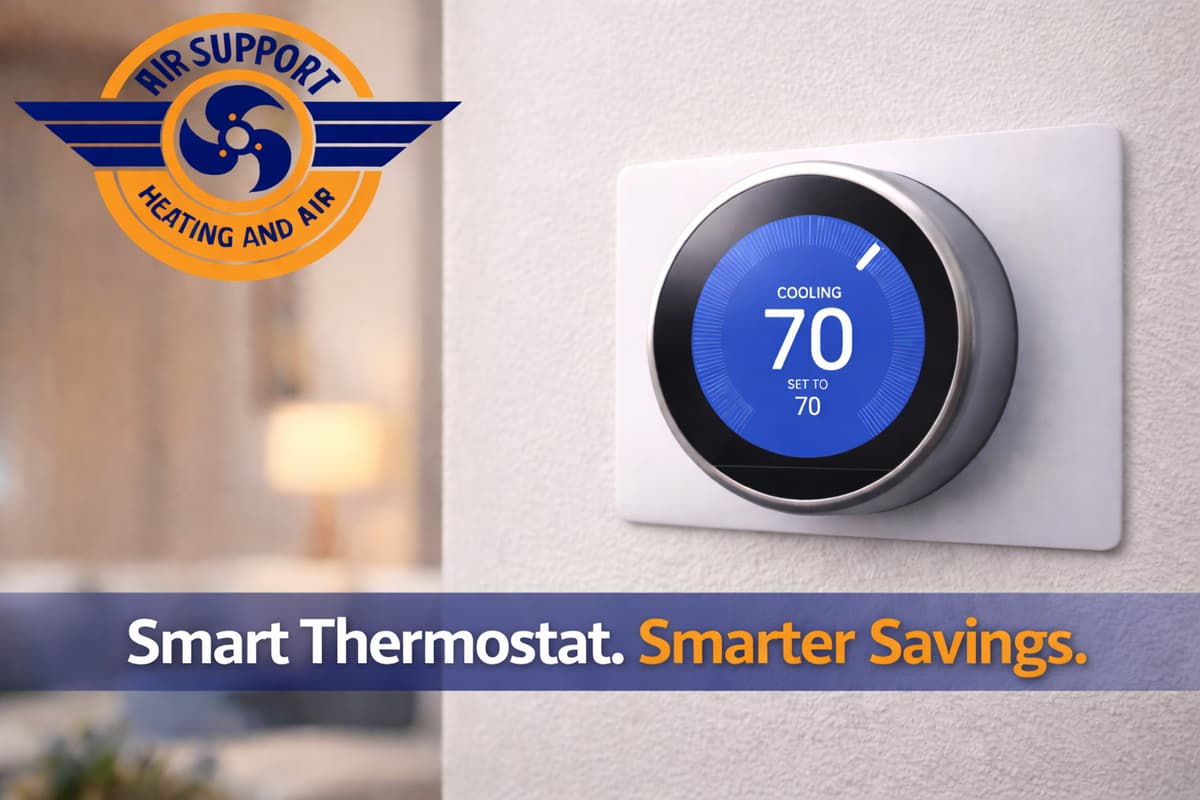
Walk into any home improvement store and you will find an entire wall of smart thermostats promising to slash your energy bills, learn your habits, and give you control of your HVAC system from anywhere in the world. The marketing is slick. The price tags range from $130 to $350+. And the big question every homeowner asks is: are they actually worth it?
For Wilmington, NC homeowners dealing with hot, humid summers that push AC systems hard from May through September, the answer is almost always yes -- but with some important caveats. Let us break down the real data, the best options, and what you need to know before buying.
What Makes a Thermostat "Smart"?
A smart thermostat goes beyond simple programmable scheduling. Modern smart thermostats offer:
- Wi-Fi connectivity for remote control via smartphone apps
- Learning algorithms that study your habits and adjust automatically
- Occupancy sensors that detect when you are home or away
- Weather integration that adjusts settings based on outdoor conditions
- Energy usage reports that show exactly how and when you are using energy
- Geofencing that uses your phone's location to trigger home/away modes
- Voice assistant compatibility with Alexa, Google Home, and Apple HomeKit
- Maintenance reminders for filter changes and system checkups
The key difference between a smart thermostat and an older programmable model is automation. You do not have to remember to set schedules or adjust temperatures -- the thermostat handles it based on real data about your life.
The Energy Savings Data
Let us look at what the research actually says:
ENERGY STAR Findings
The EPA's ENERGY STAR program certifies smart thermostats that have been independently tested and verified to deliver energy savings. According to ENERGY STAR, certified smart thermostats save an average of 8% on heating and cooling bills -- roughly $50 per year for a typical household.
That may sound modest, but it is a conservative, verified average across all climate zones. In Wilmington, where cooling costs make up a larger portion of annual energy expenses than the national average, the actual savings are often higher.
Department of Energy Research
The U.S. Department of Energy (DOE) has found that homeowners can save as much as 10% per year on heating and cooling by simply turning the thermostat back 7-10 degrees for 8 hours a day. Smart thermostats automate this behavior -- and then optimize it further with occupancy detection and learning algorithms.
Real-World Studies
A Nest Labs study of actual customer data found average savings of 10-12% on heating and 15% on cooling. For a Wilmington homeowner spending $200/month on electricity during summer (a significant portion of which goes to cooling), that 15% savings translates to roughly $30/month during peak cooling season.
Over the lifespan of a smart thermostat (typically 5-10 years), even the conservative ENERGY STAR estimate yields $250-500 in total savings -- more than paying for the device itself.
Top Smart Thermostat Models for 2026
Google Nest Learning Thermostat (4th Gen) -- $280
- Auto-schedule learning adapts to your routine within a week
- Built-in temperature and humidity sensors
- Works with 95% of HVAC systems
- Sleek design with a full-color display
- Google Home integration
ecobee Smart Thermostat Premium -- $250
- Includes a remote room sensor for balanced temperatures
- Built-in air quality monitor
- Alexa voice assistant built in
- SmartSensor technology for occupancy detection
- Excellent multi-zone support
Honeywell Home T9 -- $200
- Room-by-room comfort with optional smart sensors
- Geofencing with automatic home/away modes
- Compatible with most HVAC systems including heat pumps
- Works with Alexa, Google, and Apple HomeKit
Amazon Smart Thermostat -- $80
- Budget-friendly option with solid basic features
- Powered by Honeywell technology
- Alexa integration
- Energy Star certified
- Good entry point for smart home beginners
Compatibility: The Critical Question
Before you buy any smart thermostat, you need to verify compatibility with your existing HVAC system. This is where many homeowners run into trouble.
The C-Wire Issue
Most smart thermostats require a common wire (C-wire) to provide continuous 24V power. Many older homes in Wilmington have thermostats with only 4 wires (R, G, Y, W) and no C-wire. Without it, your smart thermostat may:
- Drain its battery and shut off randomly
- Fail to maintain a Wi-Fi connection
- Cause your HVAC system to short-cycle
Solutions include:
- Having an HVAC technician run a new C-wire (the cleanest solution)
- Using a C-wire adapter kit (available for most models)
- Choosing the ecobee, which includes a power extender kit in the box
System Compatibility
Smart thermostats work with most standard systems, but you should verify compatibility if you have:
- Multi-stage heating or cooling (two-stage compressors, variable-speed blowers)
- Heat pump systems with auxiliary/emergency heat strips
- Dual-fuel systems (heat pump + gas furnace)
- Zone control systems with dampers
- Proprietary systems from certain manufacturers
Use the manufacturer's online compatibility checker before purchasing. If you are unsure, our technicians at Air Support Heating and Air can evaluate your system during a maintenance visit and recommend the best thermostat for your setup.
Setup Tips for Maximum Savings
Installing a smart thermostat is just the beginning. To get the most out of it:
1. Place It in the Right Location
Your thermostat should be on an interior wall, away from:
- Direct sunlight
- Drafts from doors and windows
- Heat sources like ovens, lamps, or electronics
- Hallways where air does not circulate well
If your current thermostat is in a poor location, having it relocated during a new AC installation or maintenance visit is a smart move.
2. Use the Eco/Away Temperature Wisely
Set your away temperature to 78-82 degrees in summer and 60-65 degrees in winter. Many homeowners set these too aggressively (85+ in summer), which forces the system to work extremely hard to recover when you return. A moderate setback saves energy without the recovery penalty.
3. Enable Humidity Control
This is critical for Wilmington. Many smart thermostats can monitor and influence indoor humidity levels by adjusting fan and compressor operation. In our humid climate, keeping indoor humidity between 40-55% improves comfort dramatically and can allow you to set the thermostat a degree or two higher without sacrificing comfort.
4. Use Room Sensors
If your smart thermostat supports remote sensors (ecobee and Nest both do), place them in the rooms where you spend the most time. This ensures the system optimizes for actual comfort in occupied spaces rather than just the hallway where the thermostat is mounted.
5. Review Your Energy Reports
Check your thermostat's energy reports monthly. Look for patterns like:
- The system running excessively during certain hours
- Unusual spikes that might indicate a developing problem
- Opportunities to adjust schedules for additional savings
When a Smart Thermostat Is NOT the Answer
A smart thermostat will not fix fundamental HVAC problems. If your system is:
- Improperly sized for your home
- Leaking refrigerant
- Running with damaged ductwork
- 15+ years old and losing efficiency
...then a smart thermostat will just give you a prettier view of a poorly performing system. Address the underlying issues first with a professional HVAC maintenance tune-up, then add smart controls to a system that is running right.
The Bottom Line
For most Wilmington homeowners, a smart thermostat is a solid investment that pays for itself within 2-5 years through energy savings alone. The added convenience, comfort optimization, and maintenance awareness are bonuses on top of the financial return.
The key is choosing the right model for your system, installing it correctly, and actually using the smart features rather than treating it like an expensive manual thermostat.
Need help choosing or installing a smart thermostat? Air Support Heating and Air can evaluate your system compatibility, recommend the best option, and ensure it is set up for maximum performance. Call (910) 469-1459 or schedule a consultation online.