Preparing Your HVAC System for Hurricane Season in Coastal NC
Hurricane season runs June 1 through November 30 each year, and for homeowners in Wilmington and the surrounding coastal communities, preparation can mean the difference between a minor inconvenience and thousands of dollars in HVAC damage. NOAA and FEMA both emphasize that preparation is the most effective protection against storm damage.
Before the Storm
1. Secure your outdoor unit. Hurricane-force winds can shift or topple a condenser. Consider hurricane straps or a concrete pad anchor system for units in high-wind zones like Wrightsville Beach and Carolina Beach.
2. Install a surge protector. Lightning and power grid fluctuations during storms can destroy control boards, compressors, and capacitors in seconds. A whole-house surge protector ($200-$500 installed) can save thousands in equipment replacement. The National Lightning Safety Institute recommends surge protection for all major appliances.
3. Turn off your HVAC system. Before the storm hits, switch your system off at the thermostat and the breaker. This prevents damage from power surges when electricity goes out and comes back on.
4. Cover your condenser (optional). A plywood shield can deflect wind-borne debris. Don't wrap the unit in plastic — trapped moisture causes corrosion. Just protect it from projectiles.
5. Clear your yard. Loose items become projectiles. Secure or store anything near your outdoor unit that wind could launch into it — patio furniture, planters, garden tools.
During the Storm
Stay away from your HVAC equipment. Don't attempt any repairs or inspections while the storm is active. Downed power lines, flooding, and flying debris make outdoor HVAC equipment areas extremely dangerous.
After the Storm
1. Don't restart immediately. Wait until the storm has fully passed and you've inspected for visible damage. According to FEMA guidelines, flooded electrical equipment should be inspected by a professional before energizing.
2. Inspect before powering on:
- Check for standing water around or inside the outdoor unit
- Look for physical damage — bent fins, dents, shifted position
- Check refrigerant lines for visible damage
- Inspect the disconnect box for water intrusion
- Look for debris inside the unit through the grille
3. Call for professional inspection if:
- The unit was submerged in any amount of water
- You see physical damage to any component
- The unit was shifted from its pad
- Power surges occurred during the storm
- You smell gas or electrical burning
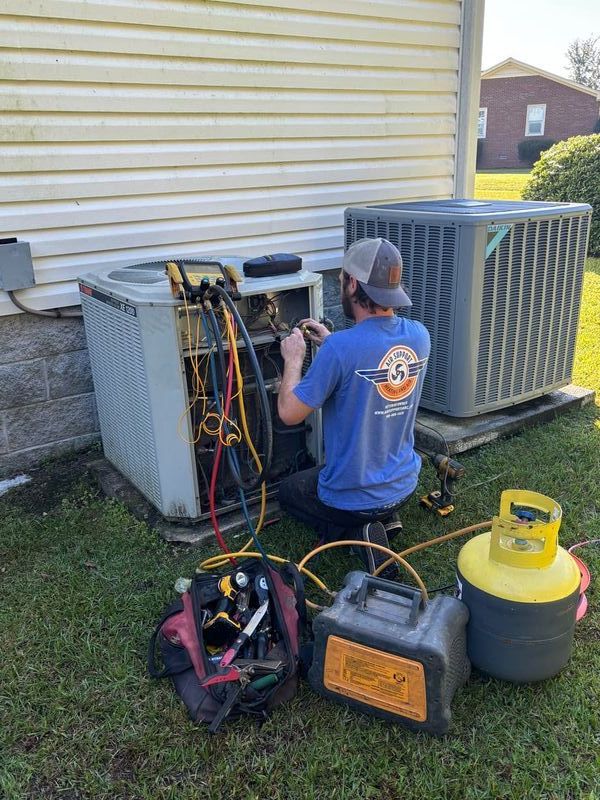
Air Support provides post-storm HVAC inspections to verify your system is safe to operate. We prioritize emergency calls from households with medical needs, elderly residents, and families with infants.
Post-Storm Recovery
After a major storm, HVAC companies in the Wilmington area are overwhelmed with calls. Having a relationship with a trusted company — through a maintenance plan, for example — means you'll be prioritized when everyone else is scrambling.
Hurricane season is here every year. Call Air Support at (910) 469-1459 to schedule a pre-season inspection that catches existing issues and prepares your system for whatever the Atlantic sends our way.